
1. Home
  2. Products
  3. "The Move"

Business simulation · project management

"The Move"

An office has to move: 40 items, 53 cubic metres, some of them fragile. Each team builds a day-by-day plan and pays for every extra day and every broken item. After the game, the debrief shows how your people plan when deadlines, money and risk pull in different directions.

  • teams of 3–5
  • 30–45 minutes of play + debrief
  • AZ · RU · EN
  • one laptop per team
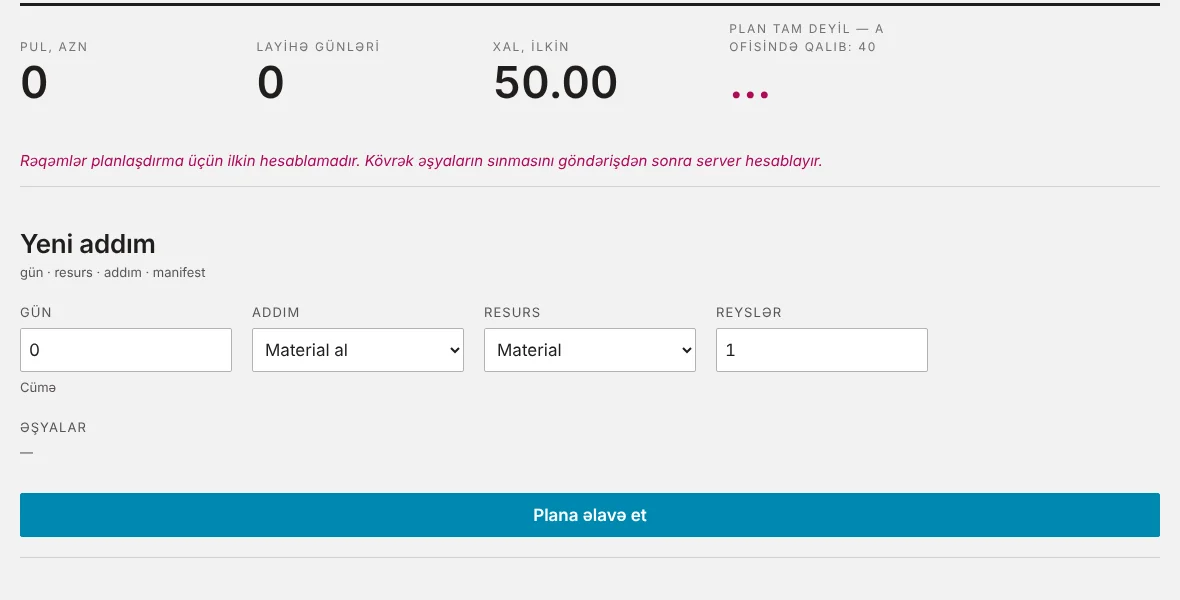
The team’s plan: money, project days and points update with every step.

The first conversation and a demo game are free.

For the client · the problem

A project fails not on delivery day but on the day the plan was made.

Deadlines, budget and risk always argue with each other. Faster means pricier, cheaper means slower, and saving on small things ends in breakages and rework. Managers make these calls every day, often without the numbers.

In “The Move” you see how the team makes that choice: the plan’s numbers change at once, and the consequences of risk show up after scoring, not a quarter later.

How the game works

One office. One plan. Every day counts.

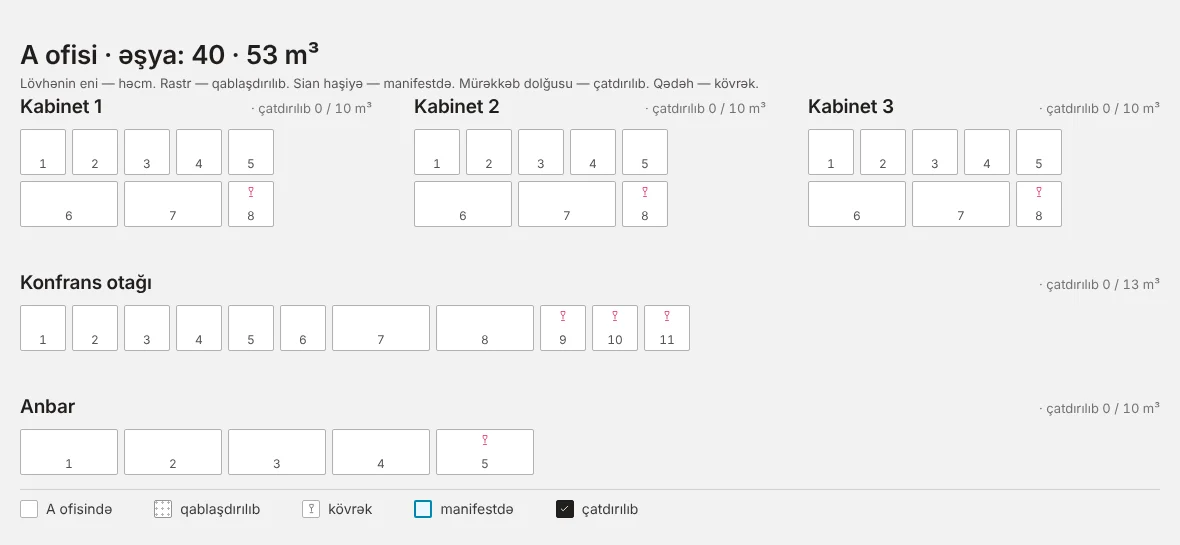
The team moves an office: three offices, a conference room and a storeroom. Every project day costs rent on both premises.

The plan is built day by day from resources, each with its own price and schedule:

  • movers and trucks of different capacity: some work on weekdays, others only on certain days;
  • packing and packing material: there is no packing without material;
  • a taxi at weekends: the only safe route for fragile items, but with little room.

Fragile items in ordinary transport can break: each breakage costs 300 AZN, and the team only finds out after scoring. The server keeps score: the team starts with 50 points, and every day and every manat spent takes some away. The plan with the most points left wins.

The office: 40 items, 53 m³. Fragile items are marked; delivered ones are filled in.

What becomes visible

The score is the occasion. The debrief shows how the team plans.

Time versus moneyprioritiesDoes the team speed up at any cost, or work out what is cheaper.
Handling riskriskDoes the team protect fragile items or hope to get lucky.
Resources and constraintsplanningDoes the team notice resource schedules up front, or only when the plan does not add up.
Team decisionsprocessWho calculates, who argues, who holds the overall plan.
Checking the plandisciplineDoes the team check the plan before submitting: luck cannot be replayed.

Debrief

We never run “The Move” without a debrief.

After scoring, a CAC trainer debriefs the teams’ plans side by side: where a team lost days, where it overpaid, where it took a risk and how that ended. The debrief takes 30–60 minutes.

  1. Facts. Teams see their plan, days, money and breakages next to the other teams’ plans.

  2. Causes. Why they chose that resource, what they did not count, who proposed another option.

  3. Transfer. How the team plans real projects, and what it will change in the next one.

Two sides of one session

What each side gets

For participants

Your team is the project office

The team builds its plan on one laptop and sees at once what each decision costs. The consequences of risk arrive after scoring, just as in real life.

  • practice in planning where deadlines, budget and risk must be held at once;
  • a clear example of how small decisions add up to a project’s result;
  • your own conclusions about how you plan as a team.

For the client

How your managers plan when they cannot have it all

The game saves every plan. So the debrief rests on the teams’ decisions, not on what they say about themselves.

  • every team’s plan: days, money, breakages and final points;
  • the trainer’s conclusions on planning and handling risk;
  • recommendations: what to develop and in which format — a programme, a session, coaching;
  • a format that fits into a project management programme.

Format

We tailor the scenario and timing to your goal.

Participantsteams of 3–5, one plan per team
Time30–45 minutes of play, 30–60 minutes of debrief
LanguageAzerbaijani, Russian, English
Wherein the room, in a browser
Equipmentone laptop per team, a screen for the facilitator
Facilitated bya CAC trainer
Priceon request

When clients book it

When “The Move” helps most

In a project management programme

Practice on a case before planning your own projects.

With heads of departments

Choosing between time, money and risk with numbers, not words.

Before a big project starts

See how the team plans before real money is spent.

For a project office

A shared planning language for people from different departments.

Questions

Frequently asked questions

Do people need to know MS Project or methodologies?

No. Everything needed is on the game screen: resources, prices and schedules. We discuss methodology in the debrief.

How many teams can play?

Several teams of 3–5. Each has its own plan, and we compare the plans in the debrief.

Can a bad plan be replayed?

No. Breakages are counted once, at scoring. As in a real project, you cannot replay your luck.

Request

Plan a “The Move” session

Tell us what projects your people run. We will pick a format and show you a demo.